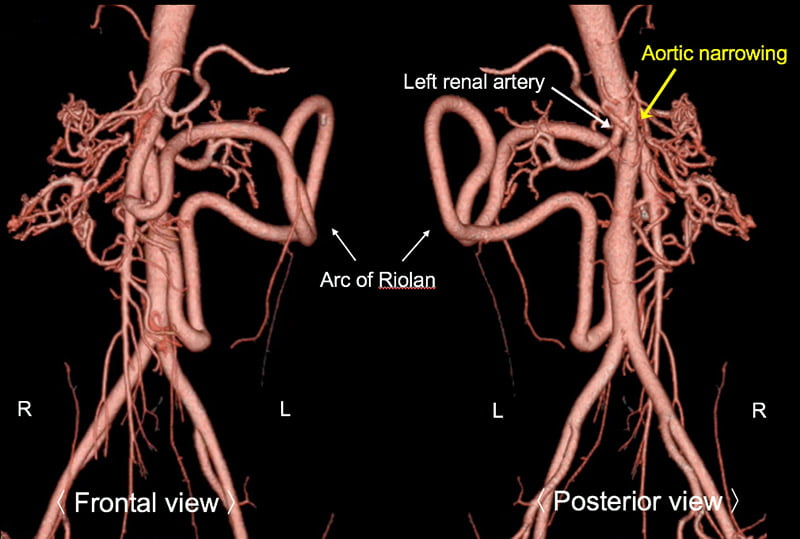
- Etiology: idiopathic, neurofibromatosis, Fibromuscular Dysplasia (FMD), vasculitis, congenital
- Demographics: Entity seen in children and young adults, presenting with renal failure, juvenile hypertension, or rarely mesenteric ischemia.
- Imaging findings: Focal stenosis of the juxta-renal aorta with occasional involvement of the renal arteries and SMA.
Coarctation of the abdominal aorta is also known as middle aortic syndrome/mid-aortic syndrome. Mid aortic syndrome describes a clinical condition which results from focal segmental narrowing of the abdominal aorta. Causes of the narrowing can be a congenital anomaly which occurs in utero while the abdominal aorta is developing or it can be cause by several acquired conditions. Acquired conditions include neurofibromatosis (NFT), retroperitoneal fibrosis which can narrow the aorta focally, fibromuscular dysplasia, mucopolysaccharidosis which is a rare entity, and Takayasu’s arteritis which is an inflammatory arteritis. All of these etiologies cause narrowing of the abdominal aorta and other vessels.
Frequently Asked Questions
What is mid-aortic syndrome?
Mid-aortic syndrome, also known as abdominal coarctation, is a condition characterized by the narrowing of the abdominal aorta. This can lead to complications such as high blood pressure, renal failure, and occasionally mesenteric ischemia. The narrowing can be congenital or caused by diseases like neurofibromatosis or fibromuscular dysplasia.
What causes mid-aortic syndrome?
Mid-aortic syndrome can be caused by congenital anomalies that occur during fetal development or by acquired conditions such as neurofibromatosis, fibromuscular dysplasia, vasculitis, and Takayasu's arteritis. These conditions lead to the narrowing of the abdominal aorta and sometimes the renal arteries.
Who is most at risk for mid-aortic syndrome?
This condition primarily affects children and young adults. While it can be congenital, it is also seen in cases associated with diseases like neurofibromatosis and fibromuscular dysplasia, which can occur in these age groups.
How is mid-aortic syndrome diagnosed?
Diagnosis typically involves imaging studies that reveal focal stenosis or narrowing of the juxta-renal aorta, and may also show involvement of the renal arteries and superior mesenteric artery (SMA). These findings help differentiate it from other vascular conditions.
What are the symptoms of mid-aortic syndrome?
Symptoms can include high blood pressure, renal failure, and rarely mesenteric ischemia, which is reduced blood flow to the intestines. However, symptoms can vary depending on the severity and specific vessels involved.
Can mid-aortic syndrome be treated?
Yes, treatment options include surgical intervention to bypass or repair the narrowed segment of the aorta. In some cases, endovascular techniques like angioplasty may be used. Treatment aims to alleviate symptoms and prevent complications such as hypertension.
Is mid-aortic syndrome hereditary?
While mid-aortic syndrome can be associated with genetic conditions like neurofibromatosis, the syndrome itself is not directly inherited. It can result from congenital anomalies or acquired conditions in individuals with or without a family history.