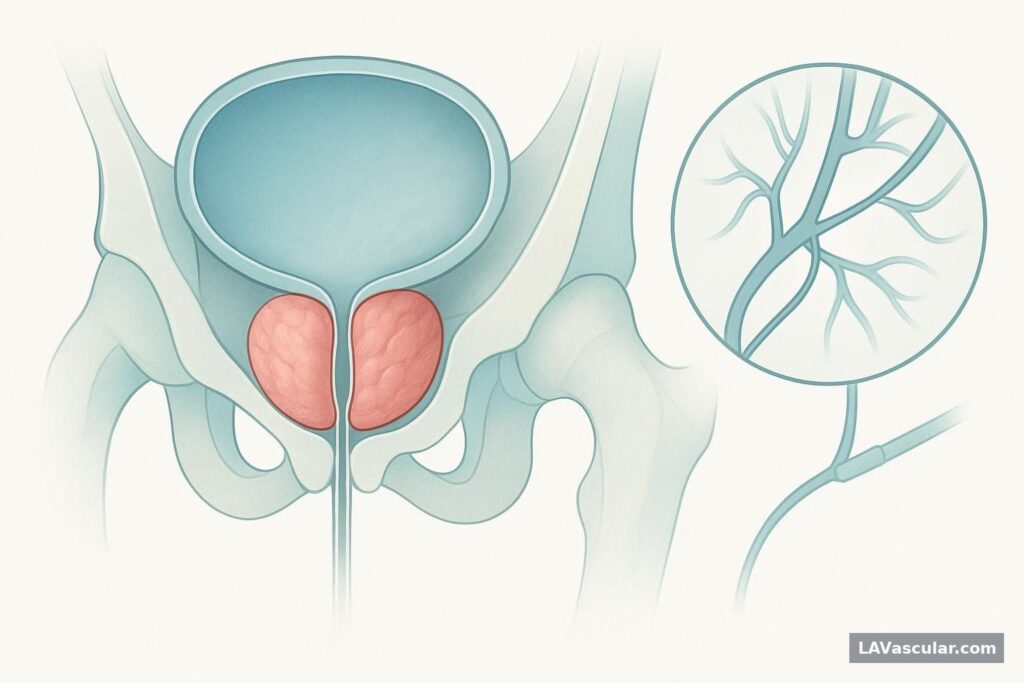
What is benign prostatic hyperplasia (BPH)?
Benign prostatic hyperplasia (BPH) is a noncancerous enlargement of the prostate gland. As the prostate grows, it can narrow the urethra—the tube that carries urine from the bladder—and cause lower urinary tract symptoms.
BPH is also called an enlarged prostate. It becomes more common with age and can affect urination, sleep, daily activities, sexual health, and bladder function. BPH does not cause prostate cancer, and having BPH does not mean a person will develop prostate cancer, although both conditions can occur at the same time.
The prostate sits below the bladder and surrounds the first portion of the urethra. It contributes fluid to semen. When prostate tissue enlarges inward, it can obstruct urine flow even when the outside size of the prostate does not seem dramatically increased.
How common is an enlarged prostate?
BPH is common in men as they age, particularly after age 50. Not everyone with prostate enlargement develops bothersome symptoms, and the severity of symptoms does not always match prostate size.
Some people have a substantially enlarged prostate with mild symptoms, while others have a relatively small prostate that causes meaningful urinary obstruction because of its location, shape, or effect on the bladder outlet.
What types of BPH are there?
BPH is not usually divided into formal disease types, but clinicians describe it by prostate size, the pattern of enlargement, and whether it is causing urinary obstruction or complications. These features help guide treatment.
A prostate may enlarge mainly in the transition zone around the urethra, develop a middle lobe that protrudes toward the bladder, or enlarge more evenly. A middle lobe can be important when choosing among certain minimally invasive treatments.
How is BPH severity described?
Symptoms are often assessed with a standardized questionnaire, such as the International Prostate Symptom Score (IPSS). The score considers incomplete emptying, frequency, intermittency, urgency, weak stream, straining, and nighttime urination.
Clinicians may also classify BPH by whether there is:
- Mild symptoms: Symptoms are present but do not significantly disrupt quality of life.
- Moderate or severe symptoms: Urinary symptoms interfere with sleep, work, travel, or daily life.
- Bladder outlet obstruction: The enlarged prostate limits urine flow or prevents complete bladder emptying.
- Complicated BPH: There is urinary retention, recurrent infection, bladder stones, blood in the urine, kidney effects, or persistent high residual urine volume.
What are the symptoms of BPH?
BPH can cause both urinary storage symptoms and symptoms related to slow or obstructed urine flow. Symptoms may develop gradually and can vary from day to day.
Common symptoms include:
- Weak urine stream
- Difficulty starting urination
- Straining to urinate
- Stopping and starting during urination
- Dribbling after urination
- A feeling that the bladder does not empty completely
- Frequent urination
- Sudden, difficult-to-delay urges to urinate
- Waking at night to urinate, called nocturia
- Urinary incontinence or leakage in some people
These symptoms are not specific to BPH. Urinary tract infection, prostatitis, bladder overactivity, urethral stricture, neurologic conditions, bladder cancer, and prostate cancer can cause similar symptoms. Evaluation is important, especially when symptoms are new, worsening, or accompanied by blood in the urine.
Can BPH cause urinary retention?
Yes. BPH can cause acute urinary retention, meaning a person suddenly cannot urinate, or chronic retention, meaning the bladder does not empty adequately over time. Acute urinary retention requires prompt medical care.
Retention may cause lower abdominal pain and swelling. It is often treated first with catheter drainage, followed by evaluation of the prostate, bladder function, medications, and options to reduce obstruction.
What causes BPH and who is at risk?
BPH is linked to aging and to hormonal changes that occur over time. Its exact cause is not fully explained by one hormone or one lifestyle factor, but age and family history are important contributors.
The prostate normally undergoes growth changes throughout adult life. With age, the balance of hormones and local growth signals can lead to enlargement of prostate tissue around the urethra.
Who is at higher risk for an enlarged prostate?
The likelihood of BPH rises with age. Factors associated with BPH or more bothersome urinary symptoms include:
- Older age
- Family history of enlarged prostate
- Metabolic conditions, including obesity and diabetes
- Heart and blood vessel disease
- Lower physical activity
- Some medications that affect bladder contraction or urine flow
Decongestants and certain allergy medications can make urinary symptoms worse in some people. Diuretics can increase frequency and nighttime urination because they increase urine production, even though they do not cause prostate enlargement.
Does lifestyle cause BPH?
Lifestyle does not directly cause BPH, but fluid habits, caffeine, alcohol, constipation, excess weight, and medication use can influence urinary symptoms. Improving these factors may reduce symptoms for some people but may not be enough when there is substantial obstruction.
How is BPH diagnosed?
BPH is diagnosed through a medical history, symptom review, physical examination, urine testing, and selected bladder or prostate tests. The goal is to confirm the likely cause of symptoms, measure their impact, and identify complications or conditions needing different treatment.
A primary care clinician, urologist, or other qualified clinician may begin the evaluation. If a minimally invasive procedure is being considered, an interventional radiologist and urologist may both contribute to treatment planning.
What tests are used to diagnose an enlarged prostate?
Evaluation may include:
- Symptom questionnaire: Often the IPSS, to measure symptom severity and treatment response.
- Medical history: Including fluid intake, medications, prior urinary procedures, neurologic conditions, infections, and sexual function concerns.
- Physical examination: This may include a digital rectal examination to assess prostate size and contour.
- Urinalysis: To look for infection, blood, glucose, or other abnormalities.
- Blood tests: Kidney function tests may be appropriate when retention or kidney effects are suspected. A prostate-specific antigen (PSA) test may be used when clinically appropriate, recognizing that BPH can raise PSA levels.
- Post-void residual measurement: Ultrasound measures how much urine remains in the bladder after urination.
- Urine flow test: Uroflowmetry measures the rate and pattern of urine flow.
- Ultrasound or other imaging: Can estimate prostate size, evaluate the bladder, and identify stones or other findings.
- Cystoscopy or urodynamic testing: Used selectively when the diagnosis is uncertain, prior treatment has failed, or another bladder or urethral problem is suspected.
Does a high PSA mean BPH or prostate cancer?
A PSA level alone cannot diagnose BPH or prostate cancer. BPH, infection, inflammation, recent urinary retention, and other factors can raise PSA, while some prostate cancers occur with PSA values that are not markedly elevated.
Clinicians interpret PSA alongside age, prostate size, examination findings, prior PSA results, imaging, and sometimes further testing. Any concern for cancer should be evaluated before choosing BPH treatment.
What are the treatment options for BPH?
BPH treatment ranges from observation and lifestyle changes to medications, minimally invasive procedures, and surgery. The best option depends on symptom severity, prostate anatomy and size, bladder function, medical conditions, treatment goals, sexual function priorities, and whether complications are present.
Not everyone needs immediate intervention. People with mild symptoms and no complications may choose watchful waiting with periodic follow-up.
Can lifestyle changes help an enlarged prostate?
Yes. Lifestyle changes can reduce urinary urgency, frequency, and nighttime urination, especially when symptoms are mild. They do not remove enlarged prostate tissue or reliably correct significant obstruction.
- Reduce evening fluids when medically appropriate, while avoiding dehydration.
- Limit caffeine and alcohol if they trigger urgency or frequency.
- Empty the bladder on a schedule and try double voiding, which means urinating again after a short wait.
- Manage constipation, which can worsen urinary symptoms.
- Review over-the-counter and prescription medications with a clinician.
- Maintain physical activity and address weight, diabetes, sleep apnea, or other contributing health conditions.
What medications treat BPH?
Medications can improve symptoms and may be appropriate as first-line treatment for many people. They require ongoing use and may cause side effects, so the choice should reflect symptoms, prostate size, blood pressure, and individual priorities.
- Alpha blockers: These relax smooth muscle in the prostate and bladder neck to improve urine flow. They often work relatively quickly but do not shrink the prostate. Possible side effects include dizziness, low blood pressure, fatigue, nasal congestion, and changes in ejaculation.
- 5-alpha reductase inhibitors: These reduce hormonal stimulation of prostate growth and can shrink the prostate over time. They are generally most useful for larger prostates and may take months to have a meaningful effect. Possible side effects include reduced libido, erectile dysfunction, reduced ejaculate, and breast tenderness.
- Combination therapy: An alpha blocker and a 5-alpha reductase inhibitor may be used together for selected patients with bothersome symptoms and an enlarged prostate.
- Other symptom-directed medicines: Antimuscarinic drugs, beta-3 agonists, or tadalafil may be considered in selected patients, particularly when urgency, frequency, or erectile dysfunction is also present.
What minimally invasive procedures treat BPH?
Minimally invasive BPH procedures aim to open the urinary channel, reduce the effect of enlarged prostate tissue, or reduce its blood supply. They may offer shorter recovery than traditional surgery, but suitability depends on anatomy, prostate size, middle lobe configuration, retention history, anticoagulant use, and treatment goals.
Prostate artery embolization (PAE) is a catheter-based treatment performed by an interventional radiologist. Small particles are delivered through arteries supplying the prostate to reduce its blood flow, causing the gland to shrink gradually and relieving obstruction in appropriately selected patients.
Other minimally invasive options include:
- Prostatic urethral lift: Small implants pull obstructing prostate tissue away from the urethra. It is performed through the urethra and may preserve ejaculation for many patients. Prostate anatomy, particularly an obstructing middle lobe, helps determine whether it is appropriate.
- Water vapor therapy: Steam is injected through a scope into selected areas of prostate tissue. The thermal treatment causes tissue shrinkage over time. A catheter is often used temporarily during early healing.
What surgery treats BPH?
Surgery remains an important option for BPH, especially when symptoms are severe, complications are present, or less invasive treatment is not suitable or has not provided enough relief. Surgical approaches can provide substantial improvement but may involve anesthesia, a catheter, bleeding risk, and a longer recovery than some office-based or catheter-based procedures.
Transurethral resection of the prostate (TURP) is a common surgical treatment. A urologist passes an instrument through the urethra and removes obstructing prostate tissue using electrical energy. TURP does not require an external incision, but it is still surgery and commonly involves short-term catheter use and hospital or outpatient recovery depending on the individual case.
For very large prostates or complex anatomy, urologists may also consider laser procedures, enucleation techniques, or simple prostatectomy. The correct procedure depends on prostate size, anatomy, comorbidities, and surgeon expertise.
BPH treatments: how do the options compare?
No single BPH treatment is right for every person. The table below provides a general comparison; actual recommendations require individualized evaluation.
| Treatment | How it works | Typical setting | Potential advantages | Important considerations |
|---|---|---|---|---|
| Alpha blockers | Relax prostate and bladder-neck muscle | Home medication | Can improve flow relatively quickly | Must be continued; may cause dizziness or ejaculation changes |
| 5-alpha reductase inhibitors | Gradually reduce prostate growth and size | Home medication | May reduce progression risk in selected patients with larger prostates | Effect takes months; sexual side effects can occur |
| Prostatic urethral lift | Implants retract obstructing tissue | Office, ambulatory center, or hospital | No tissue removal; recovery may be relatively short | Not suitable for every prostate shape or size |
| Water vapor therapy | Steam treats selected prostate tissue | Office, ambulatory center, or hospital | Can avoid tissue resection; improvement develops over time | Temporary urinary irritation and catheter use are common during healing |
| PAE | Catheter blocks selected prostate arteries | Outpatient interventional radiology suite or hospital | No instrument passes through the urethra; useful for selected anatomy and medical risk profiles | Requires detailed artery imaging and experienced procedural planning; relief is gradual |
| TURP | Removes obstructing tissue through the urethra | Hospital or ambulatory surgery center | Established surgical option with direct tissue removal | Requires anesthesia; bleeding, catheter, and sexual side effects are possible |
What should patients expect from prostate artery embolization?
Prostate artery embolization is a minimally invasive, image-guided treatment that reduces blood flow to areas of the enlarged prostate. The prostate then shrinks gradually, which can improve urinary symptoms over the following weeks to months.
PAE is performed by an interventional radiologist who uses X-ray guidance and contrast imaging to identify the arteries supplying the prostate. It may be considered for patients with bothersome symptoms, larger prostates, recurrent retention, medication intolerance, or a desire to avoid or defer transurethral surgery, provided their arterial anatomy and overall evaluation are suitable.
How is PAE performed?
PAE is usually an outpatient procedure. Patients receive local anesthetic at the access site and often moderate sedation to promote comfort; general anesthesia is usually not required.
The typical steps are:
- Preprocedure imaging and clinical evaluation are reviewed to map pelvic arteries and confirm candidacy.
- The skin is cleaned and numbed, usually at the radial artery in the wrist or the femoral artery in the groin.
- A thin catheter is guided through the arteries under fluoroscopy toward the prostate arteries.
- Contrast dye and specialized imaging identify the vessels supplying the prostate and help avoid nearby organs.
- Tiny embolic particles are delivered into the targeted prostate arteries, typically on both sides when safely possible.
- The catheter is removed, and pressure or a closure device is used at the access site.
Procedure time varies with vascular anatomy but often takes a few hours. Most patients go home the same day after a period of observation.
What is recovery like after PAE?
Most people recover at home after PAE and return to light activities within several days, although recovery varies. Urinary improvement is gradual because the prostate needs time to shrink and the treated tissue needs time to heal.
Temporary symptoms after PAE can include pelvic pressure, urinary frequency, burning with urination, urgency, fatigue, mild nausea, or low-grade fever. These symptoms are often managed with hydration, anti-inflammatory medication when appropriate, and other prescribed medicines.
A urinary catheter may be needed temporarily in people who already have retention or who cannot urinate after the procedure. Follow-up usually includes symptom scoring, medication review, urine-flow or bladder-emptying assessment when needed, and communication with the referring urologist or primary clinician.
Who may not be a candidate for PAE?
PAE is not appropriate for every cause of urinary symptoms. Patients need evaluation for bladder dysfunction, urethral stricture, active infection, suspected prostate cancer, severe arterial disease that prevents catheter access, or other conditions that may limit benefit.
Prostate size alone does not determine candidacy. A multidisciplinary discussion may be useful when there is prior prostate surgery, a large middle lobe, chronic catheter dependence, kidney impairment, significant anticoagulation needs, or complex pelvic arterial anatomy.
What are the complications of BPH and its treatments?
Untreated BPH can lead to complications in some people, including urinary retention, recurrent urinary tract infections, bladder stones, visible blood in the urine, bladder damage, and occasionally kidney problems. These complications warrant prompt urologic assessment.
Every treatment also has potential risks. The likelihood and severity depend on the procedure, prostate anatomy, medications, and other health conditions.
What are the risks of BPH medications?
Alpha blockers can cause dizziness, fainting from low blood pressure, fatigue, and ejaculation changes. 5-alpha reductase inhibitors can cause sexual side effects and may alter PSA interpretation, so patients should tell all clinicians that they are taking one.
Medication side effects should be discussed rather than managed by abruptly stopping prescribed treatment. A clinician may adjust the dose, change the medication, or discuss procedural options.
What are the risks of minimally invasive BPH procedures?
Risks vary by procedure but can include temporary burning, urgency, frequency, pelvic discomfort, blood in the urine or semen, urinary tract infection, short-term urinary retention, and need for catheterization. Some patients may have persistent symptoms or need another treatment later.
For PAE, uncommon but important risks include vascular injury, contrast reaction, kidney effects from contrast in susceptible patients, infection, and unintended embolization of nearby tissues. Careful image guidance and artery mapping are used to reduce these risks.
What are the risks of TURP?
TURP may cause bleeding, infection, temporary urinary irritation, urinary incontinence, urethral scarring, erectile dysfunction, and retrograde ejaculation, in which semen enters the bladder during orgasm instead of exiting through the penis. A repeat procedure may be needed if obstruction returns.
Serious complications are uncommon but possible. The urologist can explain how individual prostate size, blood thinners, medical history, and surgical approach affect risk.
When should someone see a doctor for BPH symptoms?
Anyone with new, persistent, or worsening urinary symptoms should see a clinician, particularly if symptoms affect sleep or quality of life. Evaluation helps distinguish BPH from infection, cancer, bladder disorders, neurologic problems, and other causes.
Seek urgent medical care for:
- Inability to urinate
- Severe lower abdominal pain or bladder swelling
- Fever, chills, or feeling acutely ill with urinary symptoms
- Visible blood in the urine, especially with clots
- Severe back or flank pain, vomiting, or signs of kidney problems
- New weakness, numbness, or loss of bowel control along with urinary changes
People using blood thinners, those with a history of urinary retention, and those with kidney disease should contact their clinician early when urinary symptoms worsen. Do not stop anticoagulants or prescription urinary medications without medical guidance.
Frequently Asked Questions
What is the best treatment for an enlarged prostate?
The best treatment depends on symptom severity, prostate size and shape, bladder function, medical conditions, and personal goals. Options include observation, medications, prostatic urethral lift, water vapor therapy, PAE, TURP, and other surgical approaches.
Is prostate artery embolization painful?
PAE is usually performed with local anesthetic and moderate sedation, so most patients feel limited pain during the procedure. Pelvic discomfort, urinary burning, urgency, or cramping can occur for several days afterward and are usually managed with prescribed medications.
How long does it take to recover from prostate artery embolization?
Most patients return to light activity within several days after PAE, but urinary symptoms may temporarily flare during early healing. Meaningful improvement often develops over weeks to months as the prostate shrinks.
What is the success rate of prostate artery embolization?
PAE improves urinary symptoms and quality of life for many appropriately selected patients, but results vary with anatomy, bladder function, prostate size, and technical factors. Some patients need ongoing medication or later retreatment, so an interventional radiologist and urologist should discuss expected benefit for the individual case.
Is BPH surgery covered by insurance?
Many medically necessary BPH treatments are covered by Medicare and commercial insurance, but coverage, authorization requirements, and out-of-pocket costs vary by plan and procedure. Confirm benefits with the insurer and the treating facility before treatment.
How much does prostate artery embolization cost?
The cost of PAE varies by region, hospital or outpatient setting, insurance coverage, imaging needs, and deductible. Ask the interventional radiology office and your insurer for a preprocedure estimate and coverage details.
Is prostate artery embolization safer than TURP?
PAE and TURP have different benefits and risks, so neither is universally safer for every patient. PAE avoids passing instruments through the urethra and usually avoids general anesthesia, while TURP directly removes tissue and may be preferred for certain anatomy or complications.
How long do BPH treatments last?
Medication benefits generally last only while the medication is taken. Procedural durability varies by treatment and patient; symptoms can recur over time, and some people need additional medication or another procedure.
Minimally invasive treatment options for benign prostatic hyperplasia (bph)
Other treatment options
- Medications (alpha blockers, 5-alpha reductase inhibitors)
- TURP (transurethral resection of the prostate)
- Prostatic urethral lift
- Water vapor therapy