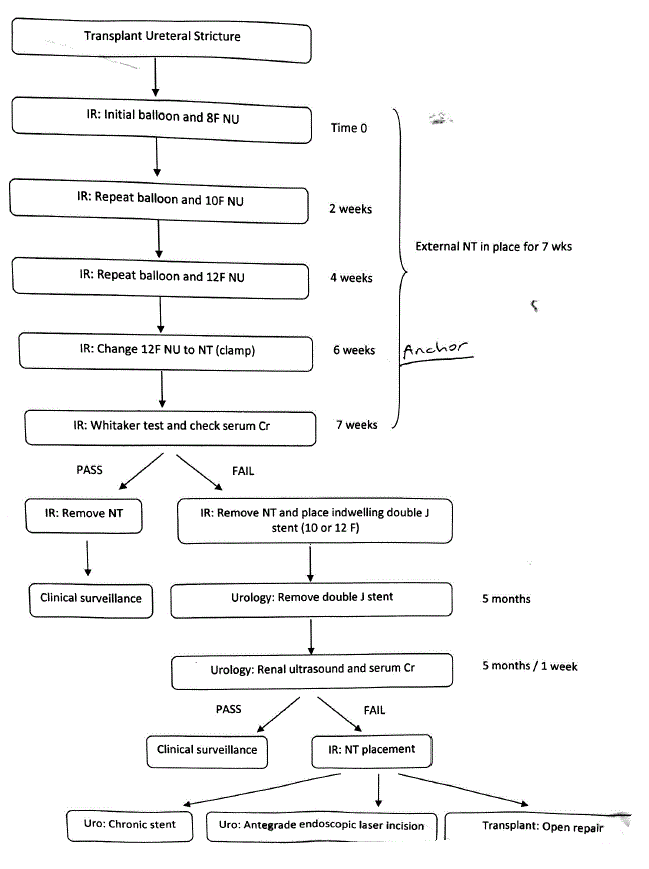
Treatment of a benign ureteral stricture can be performed through the following protocol.
Frequently Asked Questions
What is a benign ureteral stricture?
A benign ureteral stricture is a non-cancerous narrowing of the ureter, the tube that carries urine from the kidney to the bladder. This narrowing can be caused by inflammation, injury, or previous surgical procedures. It can lead to symptoms such as flank pain, urinary tract infections, or impaired kidney function.
How is a benign ureteral stricture diagnosed?
Diagnosis typically involves imaging studies such as an ultrasound, CT scan, or an intravenous pyelogram (IVP) to visualize the urinary tract. Additionally, a retrograde pyelogram might be used, where contrast dye is injected through the bladder to better see the ureters. Ureteroscopy, a procedure using a small camera to directly view the ureter, can also help in diagnosis.
What treatment options are available for benign ureteral strictures?
Treatment options include endoscopic procedures like balloon dilation or ureteral stent placement to widen the stricture. More severe cases might require surgical reconstruction, such as ureteral reimplantation or substitution with bowel segments. The choice of treatment depends on the stricture's location and severity, as well as the patient's overall health.
Is surgery always necessary for treating ureteral strictures?
Surgery is not always necessary. Many strictures can be managed with minimally invasive techniques like balloon dilation or stenting, which are less invasive than open surgery and can be effective for relieving symptoms. However, surgery might be required if these methods are unsuccessful or if the stricture is particularly severe or recurrent.
What are the potential complications of ureteral stricture treatment?
Potential complications can include bleeding, infection, injury to surrounding tissues, or recurrence of the stricture. If a stent is used, it can cause discomfort or urinary symptoms. Surgical interventions carry risks such as anesthesia-related issues or longer recovery times, but are generally safe when performed by experienced specialists.
How long does recovery take after treatment for a ureteral stricture?
Recovery time varies depending on the treatment method. Minimally invasive procedures like stenting or balloon dilation typically have shorter recovery periods, allowing patients to return to normal activities within a few days. Surgical treatments may require several weeks for full recovery, with activity restrictions and follow-up appointments to monitor healing.
Can lifestyle changes help prevent ureteral strictures?
While lifestyle changes alone cannot prevent ureteral strictures, maintaining a healthy urinary tract through adequate hydration and avoiding risk factors like urinary tract infections or trauma can help minimize the risk. Regular medical check-ups can also ensure early detection and treatment of any urinary issues.
Are there any non-surgical alternatives for managing ureteral strictures?
Non-surgical alternatives mainly include endoscopic approaches such as balloon dilation or ureteral stenting. These procedures are less invasive and can be effective for alleviating symptoms by temporarily or permanently widening the stricture. In some cases, medications may be prescribed to manage associated symptoms or complications.